
Stockton Camps 9th-12th Grade
Choose Your Passion. Learn From Real Experts. Build Your Future.
Our 9th–12th Grade program offers a focused, transformative experience for students ready to take their interests to the next level. Rather than rotating through different activities, campers choose a dedicated track—from STEM, Business, Law, or Public Policy—and immerse themselves in advanced, real-world learning that goes beyond what most classrooms can offer.
This program is designed to mirror how work actually happens beyond the classroom: deep focus, expert mentorship, collaboration, and tangible outcomes. By building depth in a specific area, students gain meaningful experiences they can speak about with clarity and confidence in college applications, interviews, and future opportunities—while also developing the skills, independence, and direction that matter long after the application process ends.
Our Different Tracks
Students in the STEM track work alongside experienced professionals to tackle real technical challenges. Campers learn how engineers and scientists approach problem-solving by using industry-style tools, testing methodologies, and design processes. Through hands-on projects, students build prototypes, analyze results, and refine their work—gaining practical skills and confidence that extend far beyond the classroom.
What Students Can Accomplish in Two Weeks:
Design and build a functional prototype or technical solution to a defined problem
Learn and apply industry-style problem-solving, testing, and iteration methods
Conduct controlled testing, analyze results, and refine their design
Document their process in a technical summary or project brief
How This Continues After Camp:
Students leave with a clear foundation they can build on during the school year—expanding their prototype, joining or founding a robotics or engineering club, entering STEM competitions, or pursuing internships and research opportunities. The project provides a concrete starting point for deeper technical exploration and future coursework.
STEM
Students in the Law track explore how legal systems function through hands-on simulations and expert-led instruction. Campers learn how laws are written, interpreted, and argued, while developing skills in reasoning, advocacy, and persuasion. By drafting arguments, analyzing cases, and participating in mock proceedings, students gain a deeper understanding of how the law shapes society—and how to think like a lawyer.
What Students Can Accomplish in Two Weeks:
Study a focused legal issue or case theme
Draft legal arguments or briefs based on real or simulated cases
Participate in structured mock hearings or trials
Practice oral advocacy and legal reasoning in front of peers and mentors
How This Continues After Camp:
Students leave with a strong foundation to pursue debate, law internships, mock trial, student government, or legal research during the school year. The experience sharpens reasoning and communication skills that directly support AP courses, competitive forensics, and pre-law exploration.
Law
The Business track immerses students in entrepreneurship, strategy, and decision-making. Campers learn how to identify problems, evaluate markets, design products, and pitch ideas with clarity and confidence. Through team-based challenges and real-world case studies, students develop analytical thinking, leadership, and communication skills essential for building ventures and navigating future careers.
What Students Can Accomplish in Two Weeks:
Identify a real-world problem and design a product or service solution
Conduct basic market research and define a target customer
Build a business model covering pricing, value proposition, and growth
Create and deliver a polished pitch presentation
How This Continues After Camp:
Students can continue refining their business during the school year—launching a small pilot, entering pitch competitions, leading a business or entrepreneurship club, or using their venture as the basis for case competitions and college essays. The camp project becomes a real portfolio piece, not just an idea.
Business
The Public Policy track focuses on how ideas become action. Students work with real policy frameworks to analyze social issues, draft policy proposals, and simulate legislative decision-making. Through debates, negotiations, and collaborative problem-solving, campers learn how governments function, how policies are shaped, and how leaders balance values, data, and public impact.
What Students Can Accomplish in Two Weeks:
Research a current public issue and analyze its causes and impacts
Draft a structured policy proposal with goals, tradeoffs, and solutions
Participate in legislative simulations, debates, and negotiations
Present policy recommendations in a formal setting
How This Continues After Camp:
Students can build on this work through student government, advocacy organizations, research papers, or civic initiatives during the school year. The policy proposal often becomes the foundation for leadership roles, community projects, or college application essays focused on impact and service.
Public Policy
A Day in the Life at Camp!
A day at Stockton Camps for high school students starts with purpose. Residential campers begin the morning getting ready with their peers before heading to breakfast, where counselors and instructors check in and set expectations for the day ahead. Breakfast is relaxed but intentional—students talk through ideas, projects they’re working on, and what they want to accomplish in their track that day.
For commuter students, the day begins just after breakfast. Students arrive on campus in the morning and are welcomed by staff before joining their track group for the day’s first session.
The morning kicks off with a short track meeting. Instructors outline goals for the day, review progress from previous sessions, and introduce new challenges. Because students are focused in a single track—STEM, Business, Law, or Public Policy—each session builds directly on work already in progress.
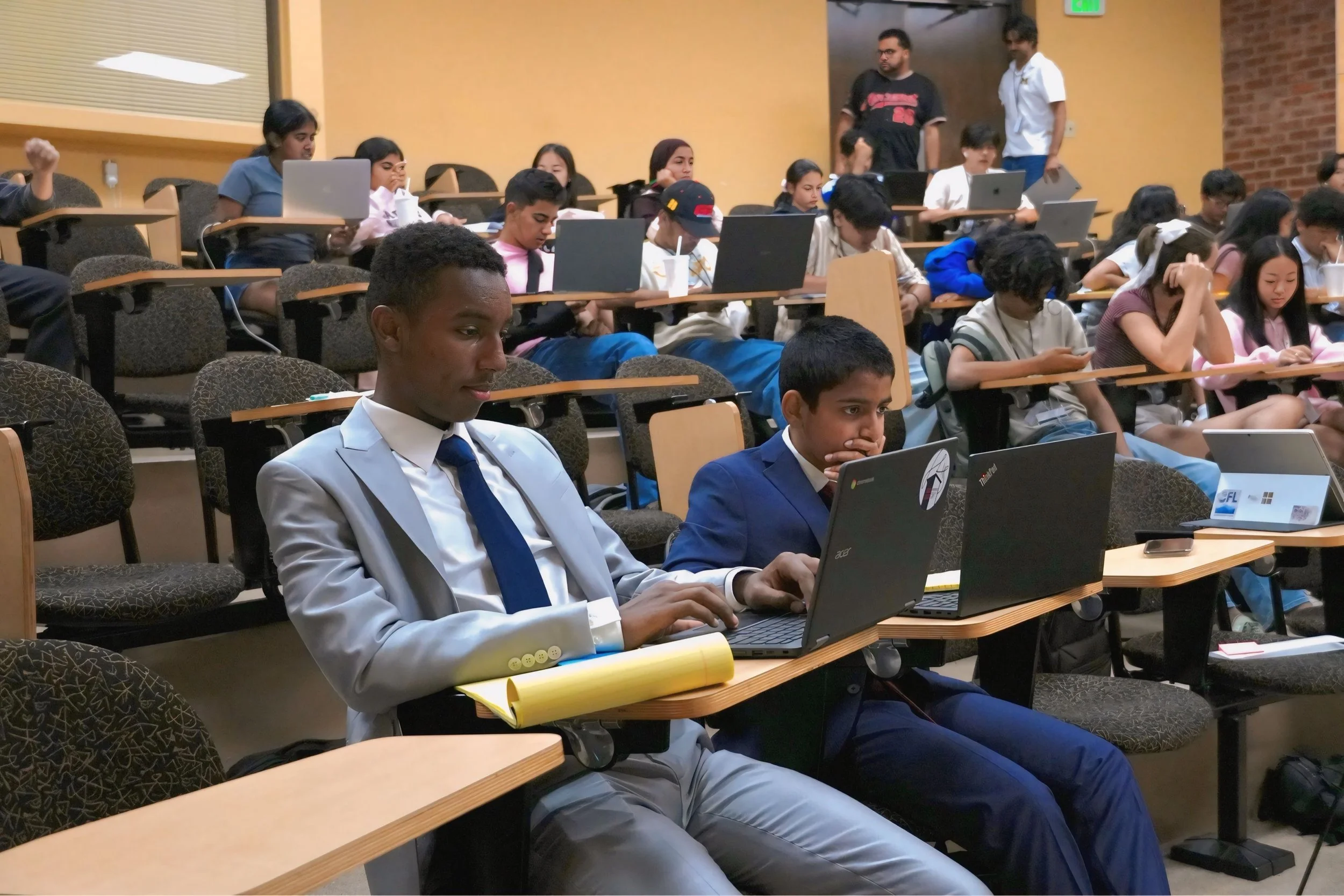
Most of the morning is spent in deep work. STEM students may be refining a prototype or running tests. Business students might be developing their venture model or preparing a pitch. Law and Public Policy students could be analyzing cases, drafting arguments, or participating in simulations. These sessions are collaborative, discussion-driven, and designed to mirror how real teams work.
Lunch provides a natural break. Students recharge, step away from their projects, and connect with friends from other tracks. It’s a chance to reset before diving back into focused work.
In the afternoon, students return to their track for applied sessions. This is often when ideas are tested, feedback is incorporated, and projects begin to take real shape. Instructors act as mentors—pushing students to think critically, ask better questions, and take ownership of their work.
For commuter students, the day concludes after the afternoon session. Students are signed out and picked up before dinner, providing a clear and consistent end to their camp day.
Residential campers transition into free time—relaxing, showering, or spending time with friends—before dinner. Evenings at Stockton Camps balance community and independence. Dinner brings students together, followed by optional evening programming like guest speakers, leadership discussions, collaborative challenges, or social activities.
As the night winds down, students reflect on the day’s progress—what they built, debated, or refined—and plan next steps for tomorrow. By lights out, they’re tired in the best way: challenged, motivated, and excited to keep pushing their ideas forward.
Every day in the 9th–12th Grade program is designed to feel intentional and meaningful—giving students the structure, mentorship, and autonomy to grow into confident thinkers ready for what comes next.

Sample Schedule
Morning
8:00–9:00 AM
Breakfast & Morning Routine (Residential Campers)
Students start the day, connect with peers, and prepare for focused track work.
9:00 AM
Commuter Drop-Off
Commuter students arrive on campus and join their track groups.
9:00–9:30 AM
Morning Track Meeting & Goals
Students meet with instructors to set objectives and plan progress for the day.
9:30–11:00 AM
Morning Focus Block 1
Deep work within chosen tracks (STEM, Business, Law, or Public Policy).
11:10 AM–12:30 PM
Morning Focus Block 2
Project development, research, simulations, or collaborative work.
Midday
12:30–1:15 PM
Lunch
Time to recharge, connect with peers, and step away from projects.
1:15–1:45 PM
Independent Recharge Time
Students relax, reflect, or prepare for afternoon sessions.
Afternoon
1:45–3:15 PM
Afternoon Focus Block 1
Applied project work, mentorship, and iterative problem-solving.
3:25–4:45 PM
Afternoon Focus Block 2
Project refinement, presentations, or advanced simulations.
5:00 PM
Commuter Pick-Up
Commuter students are signed out and picked up before dinner.
Evening (Residential Campers Only)
5:00–6:00 PM
Free Time & Showers
6:00–6:45 PM
Dinner
7:00–8:30 PM
Evening Programming
Guest speakers, leadership discussions, collaborative challenges, or social activities.
8:30–9:30 PM
Evening Free Time
Student can choose between continuing their work or doing fun activities.
9:30–10:30 PM
Evening Routine & Lights Out
Students prepare for bed and wind down for the night.