
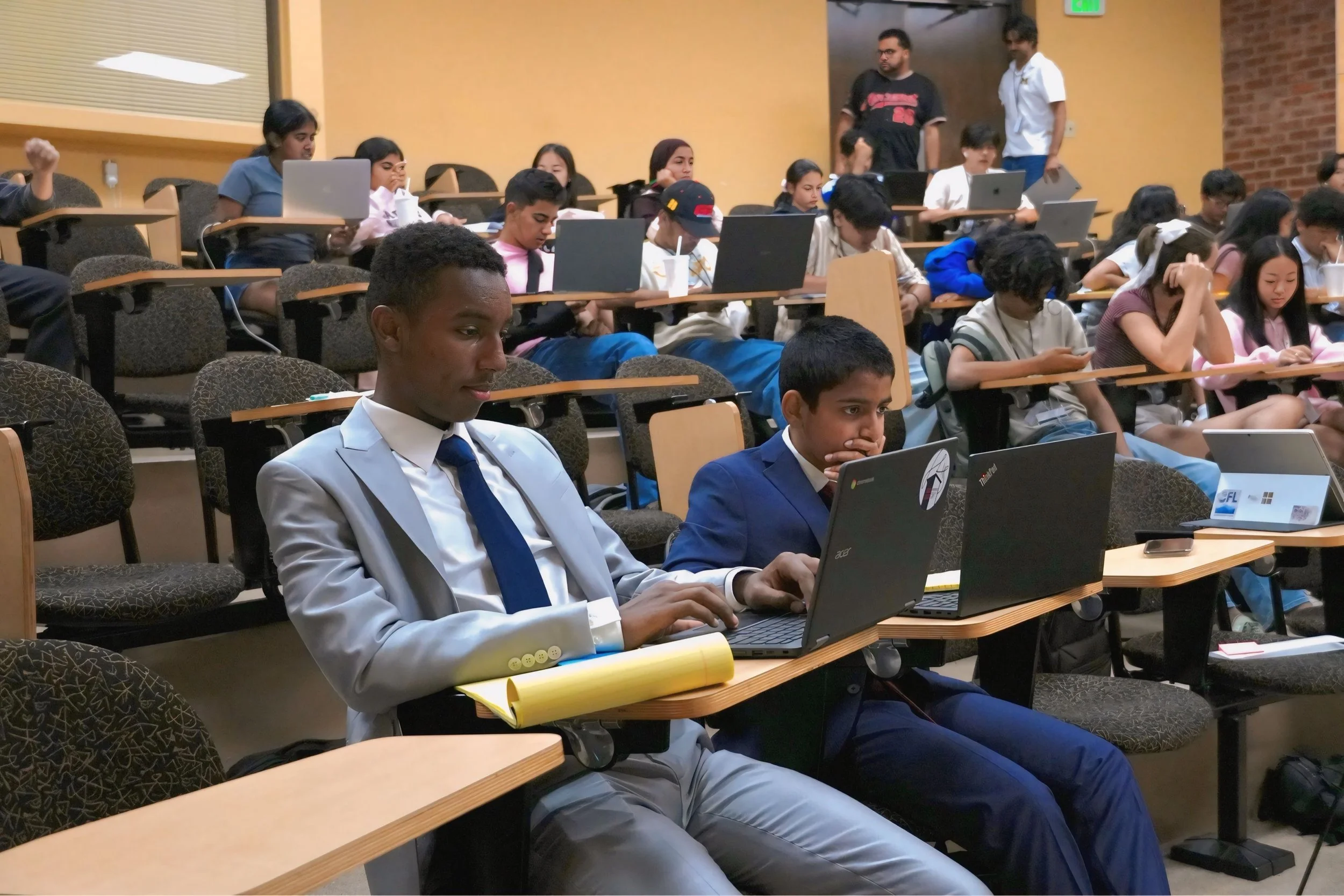
Stockton Camps 9th-12th Grade
Choose Your Passion. Learn From Real Experts. Build Your Future.
The Stockton Camps High School Program is a two-week leadership immersion designed for students who are ready to go beyond exploration and into real-world application. This program blends career sampling with rigorous leadership training, helping students understand how leaders think, decide, communicate, and create impact.
Students don’t just learn about leadership — they practice it, apply it, and reflect on it through immersive training and one of three focused leadership pathways. Along the way, students produce substantive, high-quality projects that demonstrate initiative, depth, and ownership.
These projects are designed to be more than summer work. Students leave with:
Concrete leadership experiences they can articulate in college applications and interviews
Tangible projects that show impact, decision-making, and follow-through
A clearer narrative about their interests, values, and direction
Rather than padding résumés, the program helps students build authentic stories — grounded in real work, real challenges, and real leadership decisions.
Program Logistics
Grades: 6–8
Format: Residential with Commuter Options Available
Length: Two Weeks
Dates: July 12th-July 26th
Price
Two Week Residential (Recommended): $2,999.99
Two Week Commuter: $1,299.99
Residential students experience full immersion, including evening programming and weekend leadership simulations. Commuter students participate fully in daytime programming and all core leadership experiences.
Stated prices exclude transaction fees if paying online by credit or debit card.
Our Philosophy
The High School Program is guided by one central idea:
Leadership is learned by doing.
Rather than focusing on theory alone, students are placed in situations that require judgment, communication, collaboration, and accountability. They learn how ideas become action — and how leaders navigate uncertainty, tradeoffs, and responsibility.
Students leave with:
A deeper understanding of how leadership works
Experience applying leadership in real contexts
Confidence in their ability to think, decide, and communicate effectively
All high school campers participate in a shared Leadership Core, which serves as the foundation of the program.
The Leadership Core trains students in the universal skills required to lead effectively, regardless of field.
Core focus areas:
Decision-making under pressure
Communication and presence
Team leadership and group dynamics
Ethics, responsibility, and long-term impact
Leadership Core sessions are highly interactive and applied, using:
Simulations
Case studies
Scenario-based challenges
Reflection and debriefs
These sessions run throughout the program and are intentionally scheduled so students can immediately apply what they learn within their chosen pathway.
Leadership Core
Leadership Pathways
After foundational Leadership Core training, students specialize in one of three leadership pathways. Each pathway represents a different way leaders create change in the world and are led by instructors with years of experience in the field.
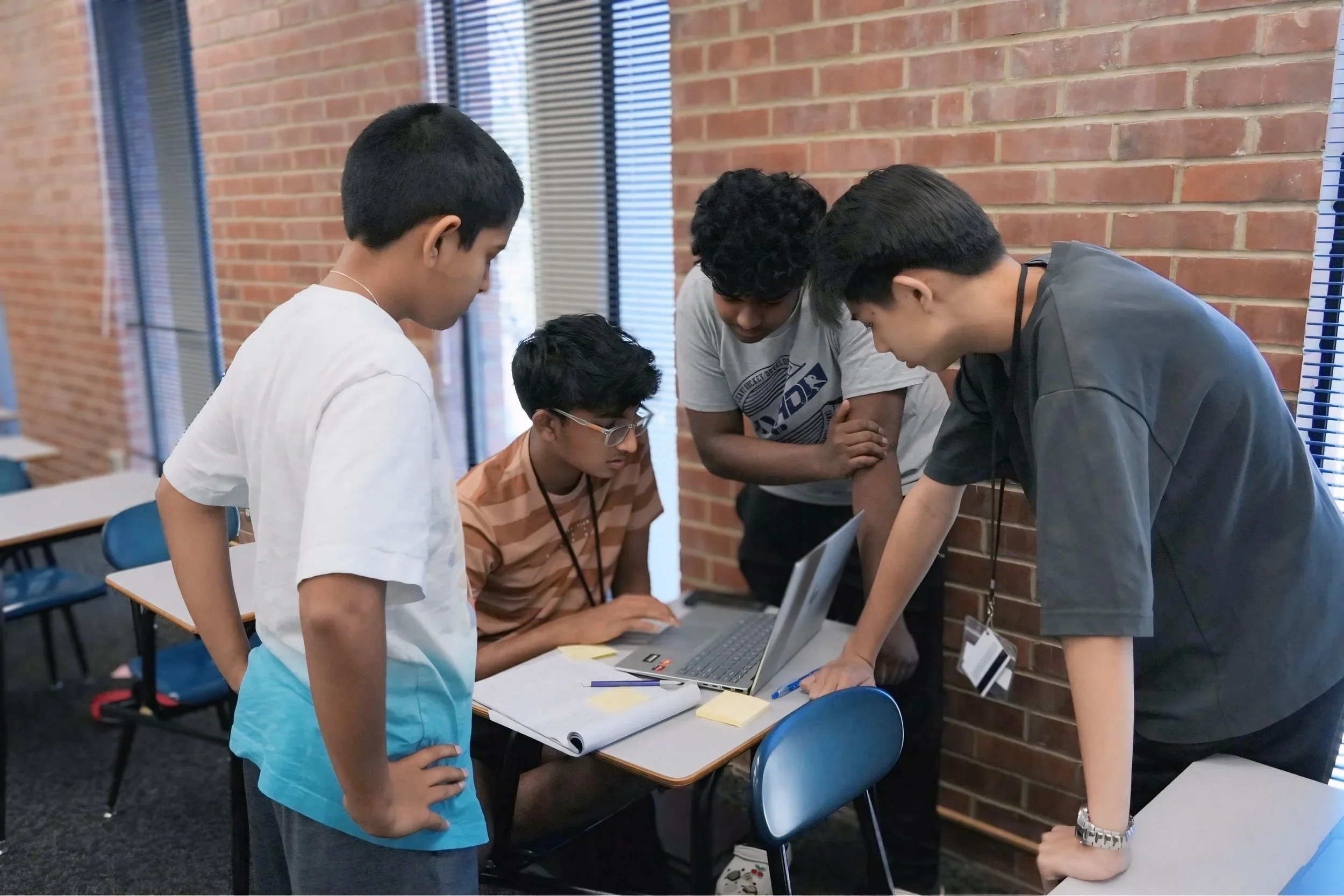
Business Leadership Pathway
For students interested in innovation, strategy, and building something from the ground up.
Students in the Business Leadership Pathway design and develop a venture centered on solving a real problem. Rather than focusing on flashy ideas, students are pushed to think critically about feasibility, execution, and long-term sustainability.
Throughout the program, students work through the same questions real founders and executives face:
What problem is worth solving?
Who does it actually help?
What tradeoffs does this solution require?
How do leaders decide when information is incomplete?
Key areas of focus include:
Identifying and validating real problems
Designing practical, defensible solutions
Understanding sustainability, incentives, and scale
Making strategic decisions under uncertainty
Final Deliverable:
A fully developed venture concept that includes a clear problem definition, solution design, strategic rationale, and leadership decision analysis.
Leadership skills emphasized:
Accountability and ownership
Strategic thinking
Execution under constraints
College application value:
Students leave with concrete examples of initiative, leadership, and problem-solving. They will have a thoughtful project they can clearly explain, build, and reflect on in essays and interviews.
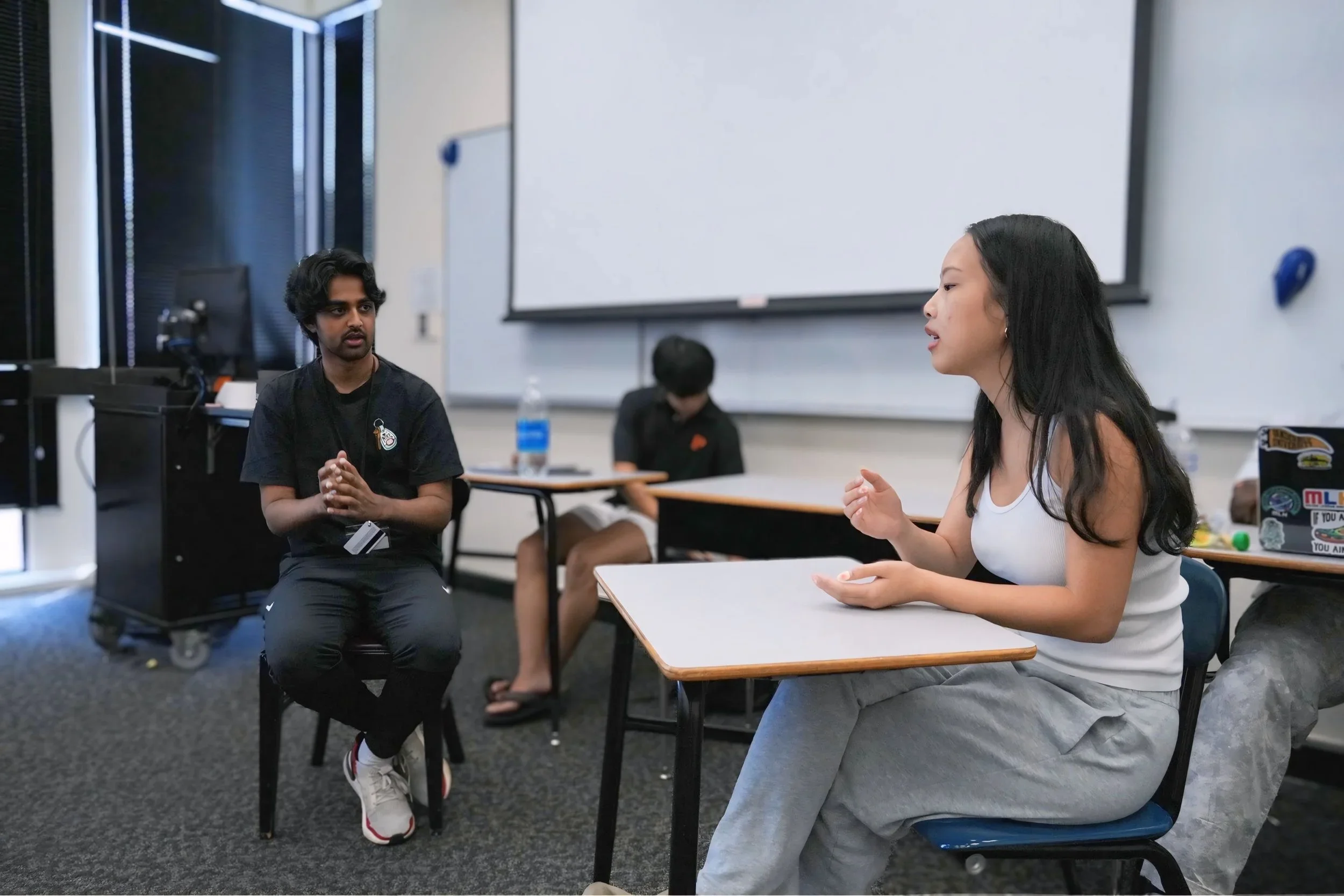
Policy & Law Leadership Pathway
For students interested in government, law, debate, advocacy, and systemic change.
Students in the Policy & Law Leadership Pathway design a policy advocacy initiative that tackles a real issue within existing systems. Rather than debating hypotheticals, students learn how change actually happens — through institutions, stakeholders, compromise, and persuasion.
Students wrestle with questions leaders in public life face every day:
Who has power, and why?
How do you persuade without oversimplifying?
When do ethics and effectiveness collide?
How do leaders balance ideals with real-world constraints?
Key areas of focus include:
Understanding institutions, laws, and stakeholders
Crafting persuasive, evidence-based arguments
Navigating ethics, compromise, and opposition
Communicating strategically to different audiences
Final Deliverable:
A policy advocacy campaign outlining the issue, proposed solution, stakeholder map, strategy for adoption, and path to real-world impact.
Leadership skills emphasized:
Persuasion and clarity
Ethical reasoning
Strategic communication
College application value:
Students develop a sophisticated understanding of civic leadership and leave with a nuanced story about influence, ethics, and responsibility — ideal for students interested in law, politics, public service, or debate-heavy academic environments.
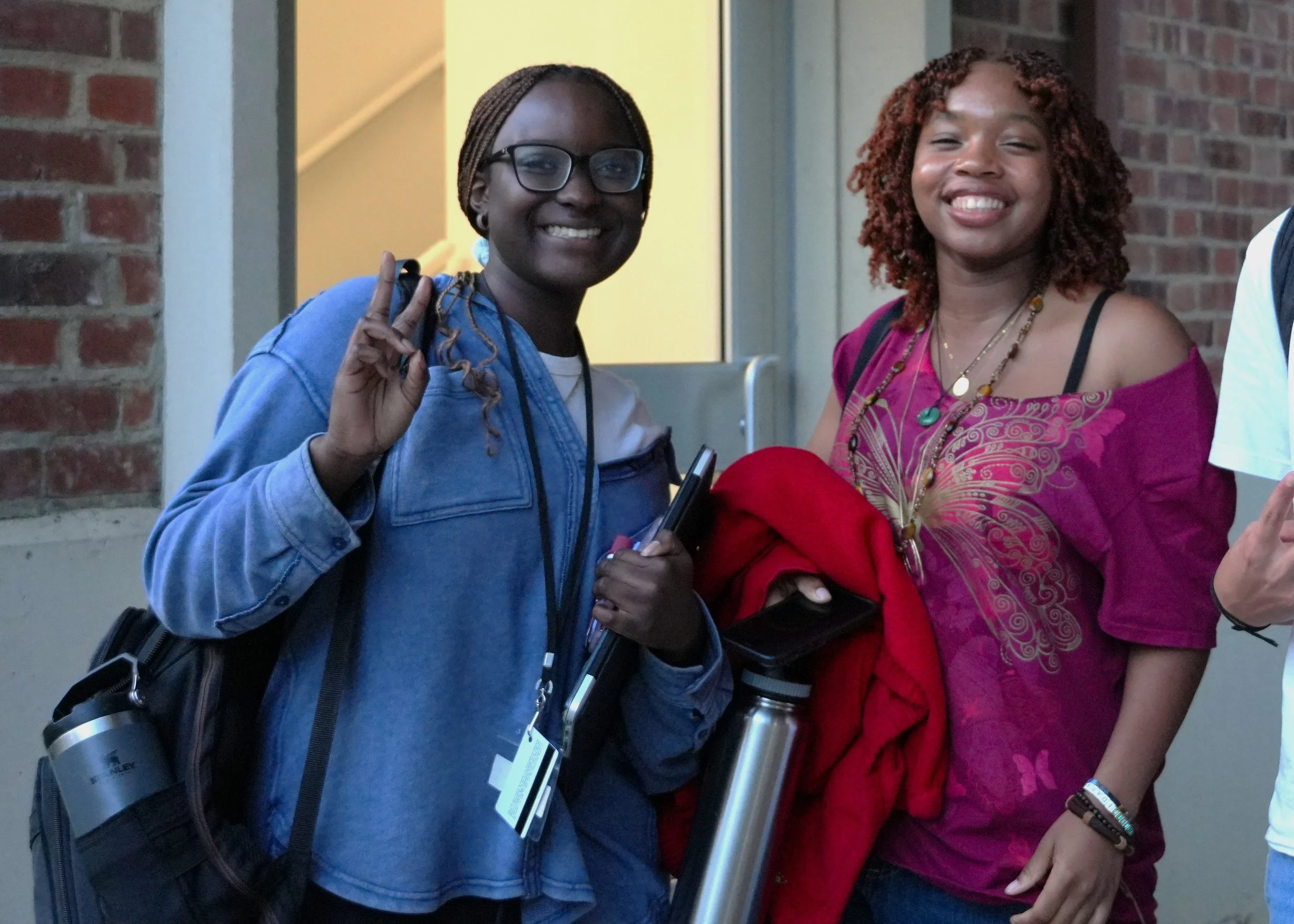
Nonprofit Leadership Pathway
For students driven by service, community impact, and mission-driven leadership.
Students in the Nonprofit Leadership Pathway design a mission-driven organization focused on addressing a real community need. Rather than focusing on good intentions alone, students learn what it takes to create sustainable, ethical, and effective impact.
Students confront questions nonprofit leaders face constantly:
What problem is most urgent — and why?
How do you serve communities responsibly?
How do you measure impact beyond good intentions?
How do leaders think long-term rather than short-term?
Key areas of focus include:
Identifying genuine community needs
Building mission, values, and organizational identity
Designing programs that create measurable impact
Planning for sustainability and long-term growth
Final Deliverable:
A nonprofit organization plan that includes mission, programs, impact strategy, and sustainability model.
Leadership skills emphasized:
Empathy and ethical leadership
Coalition-building
Long-term thinking
College application value:
Students leave with a deeply reflective leadership experience rooted in service, responsibility, and impact — powerful for essays centered on values, community engagement, and purpose-driven leadership.
A Shared Outcome Across All Pathways
Regardless of pathway, every student leaves with:
A substantial, defensible project they helped build and continue to keep working on after camp
Leadership decisions they can clearly explain and reflect on
Real experiences navigating uncertainty, teamwork, and responsibility
Strong material for college applications, interviews, and future opportunities
Sample Daily Schedule
Morning
7:00–7:45 AM
Breakfast & Morning Prep (Residential Students)
Residential students start the day with breakfast and informal check-ins with peers and staff.
7:30–8:00 AM
Arrival & Drop-Off (All Students)
Commuter students are dropped off on campus. Residential students transition into the program day. Staff are available to welcome students and assist with check-in.
8:00–8:30 AM
Morning Leadership Brief
Students gather as a full cohort to review the day’s objectives, discuss leadership themes, and set expectations.
Late Morning
8:30–10:00 AM
Leadership Core Session
Interactive leadership training focused on decision-making under pressure, communication, ethics, and team leadership. Sessions include simulations, case studies, and structured discussion.
10:15 AM–12:00 PM
Leadership Pathway Work Block
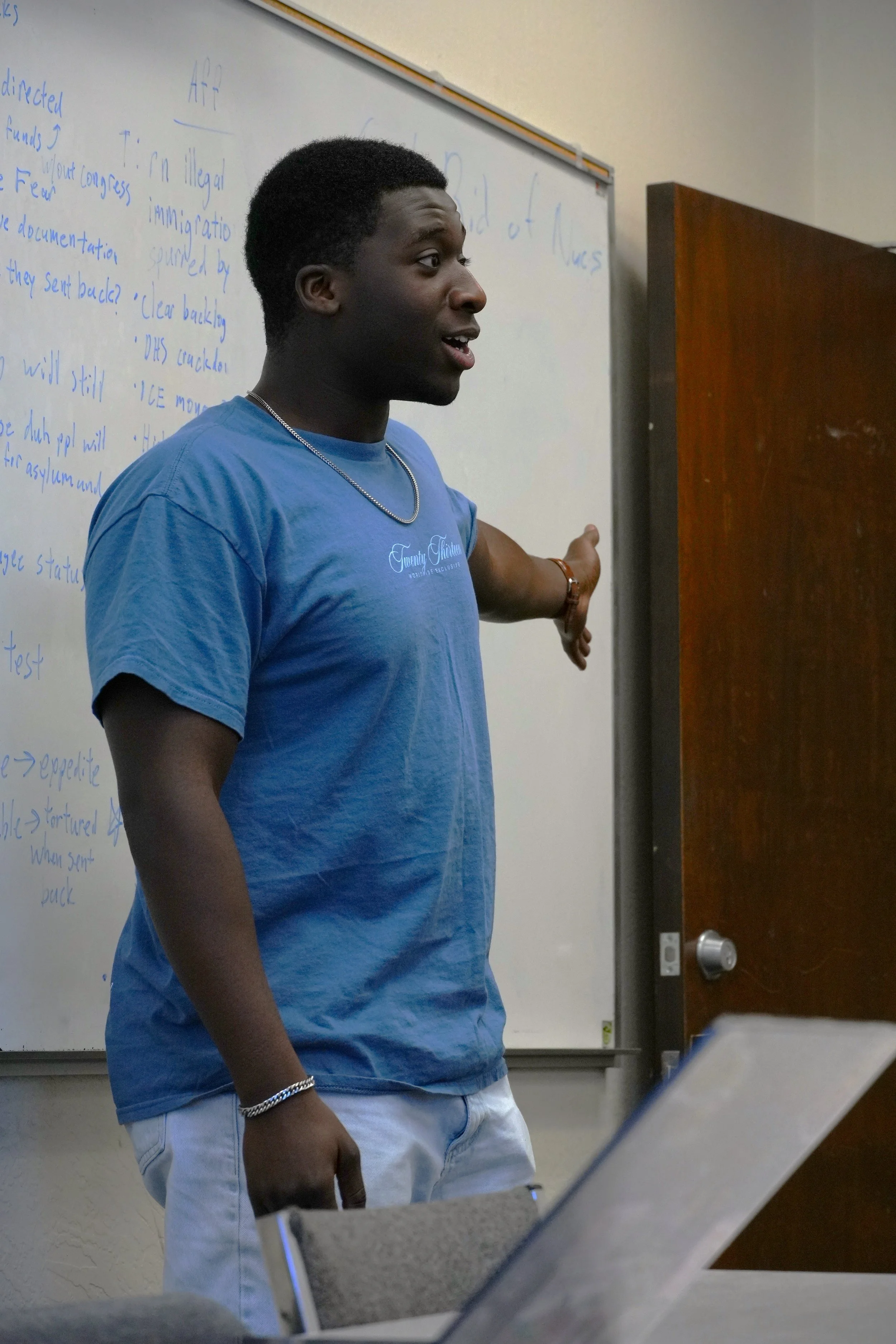
Students break into their chosen pathways—Business Leadership, Policy & Law Leadership, or Nonprofit Leadership—to apply Leadership Core concepts through hands-on work and collaboration.
Midday
12:00–12:45 PM
Lunch
Students eat together, connect informally, and recharge.
12:45–1:15 PM
Reflection & Strategy Time
Guided reflection, journaling, or small-group discussion focused on leadership decisions and growth.
Afternoon
1:15–3:00 PM
Leadership Pathway Deep Work
Extended work time for students to develop projects, navigate tradeoffs, receive feedback, and refine their thinking.
3:15–4:30 PM
Applied Leadership Workshop
Skill-focused sessions such as public speaking, negotiation, teamwork dynamics, or strategic thinking.
End of Program Day
4:30–5:00 PM
Pick-Up (Commuter Students)
Commuter students are signed out and picked up.
Evening Programming (Residential Students)
5:30–6:30 PM
Dinner
Shared dinner with peers and staff.
6:30–7:30 PM
Leadership Simulation or Team Challenge
Crisis scenarios, negotiation exercises, ethical dilemmas, or collaborative challenges designed to be engaging and high-energy.
7:30–9:00 PM
Community & Free Time
Unstructured time for students to relax, socialize, play games, spend time outdoors, or unwind with friends. Staff are present to supervise and support.
9:00–9:30 PM
Reflection & Wind-Down
Optional small-group reflection, journaling, or quiet discussion to process the day.
10:30–11:00 PM
Lights Out
Students settle in for the night, ready for the next day.
Final Capstone: Leadership Summit
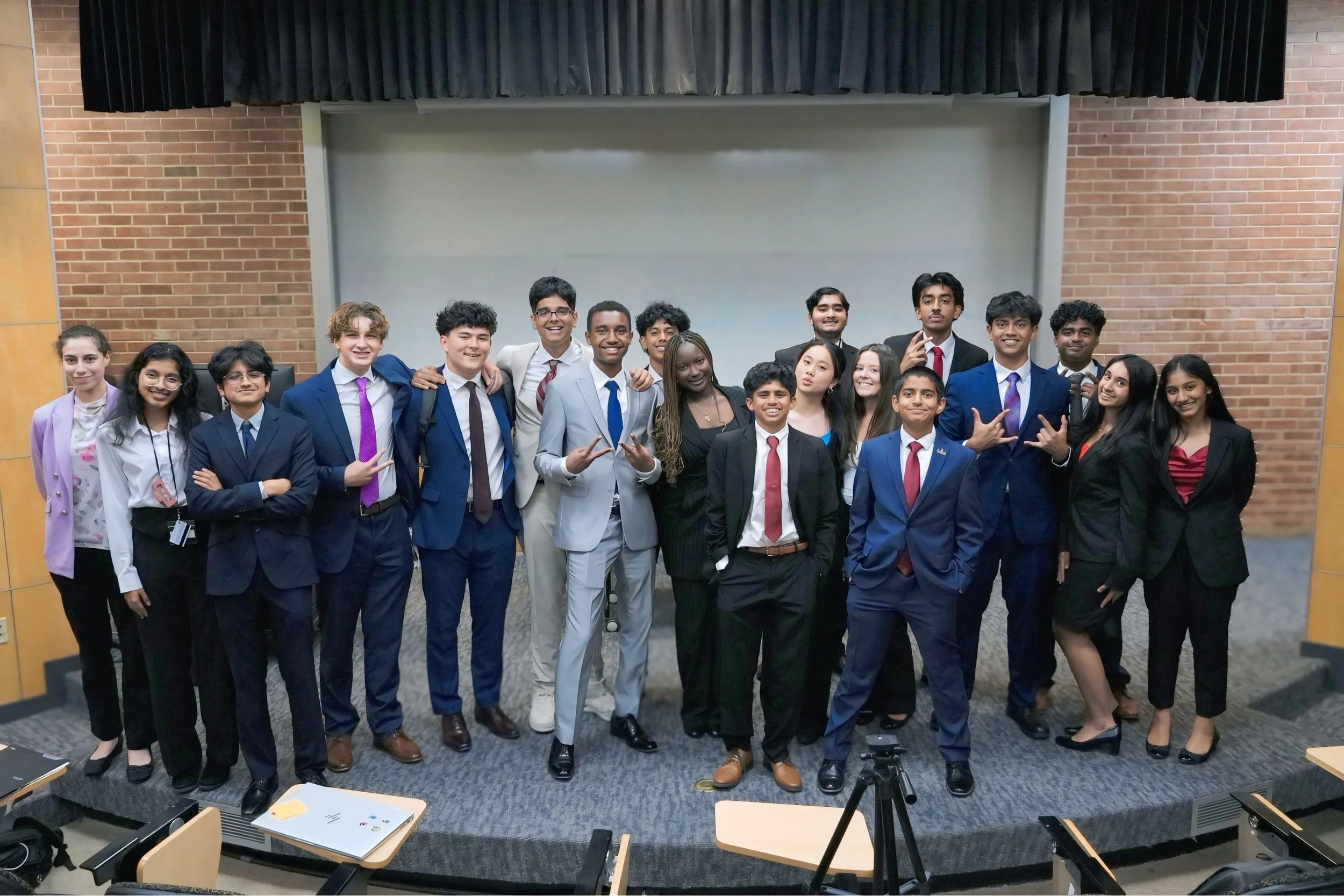
The program culminates in a Leadership Summit held on Sunday, July 26.
At the Summit:
Students present what they built in their pathway
They explain leadership decisions and tradeoffs
They reflect on challenges and growth
Parents, staff, and invited local leaders attend
The Summit is framed as a professional leadership event, emphasizing clarity of thought, ownership, and real-world relevance.
Weekends & Evenings
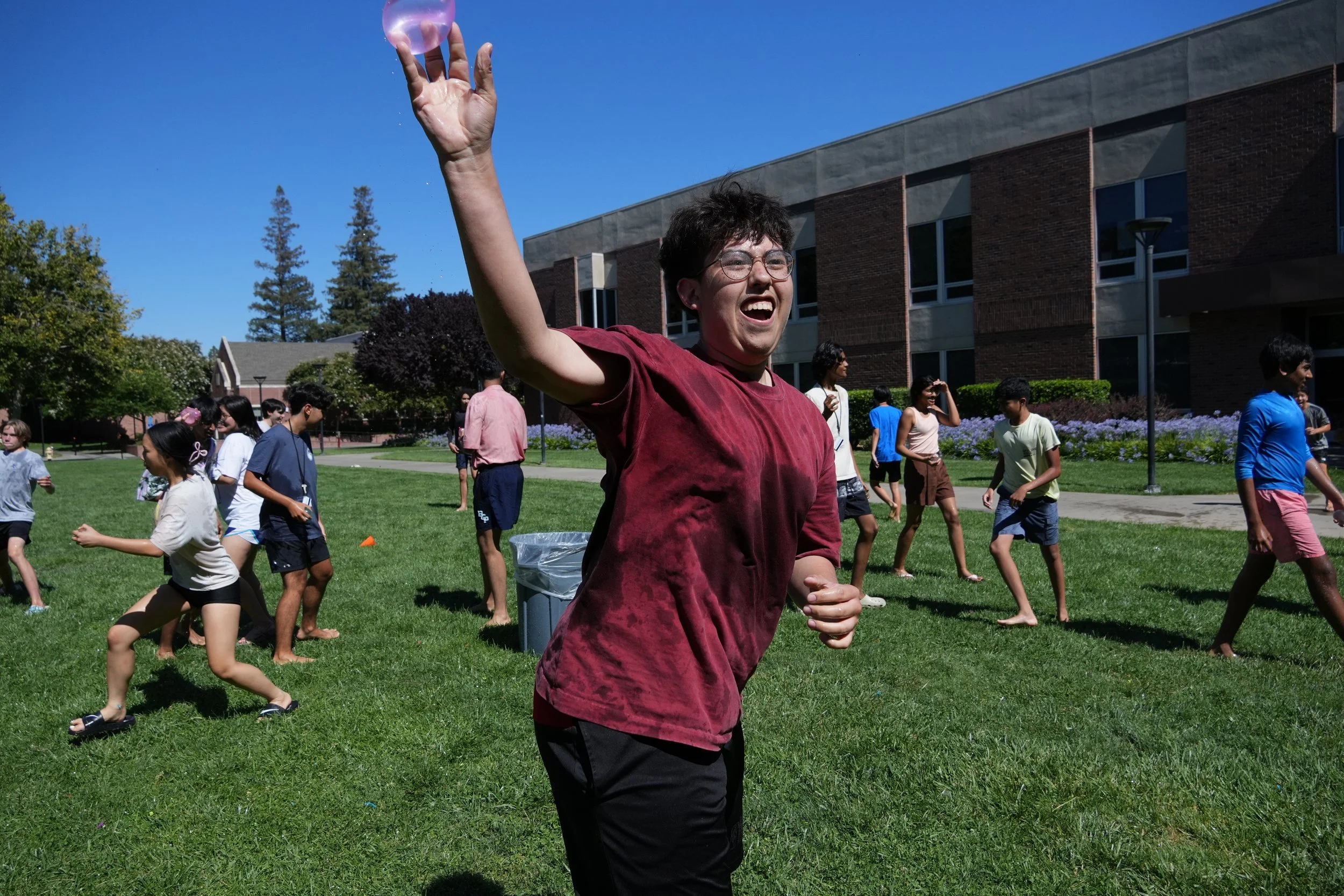
Leadership at Stockton Camps doesn’t stop when the classroom ends. Evenings and weekend experiences are designed to help students apply skills in interactive, energetic, and social ways — building both leadership capacity and lasting community.
Saturday, July 18 — Lecture Series with Industry Experts
On Saturday, July 18, all students are invited to a leadership lecture series featuring professionals across industries — from founders and nonprofit leaders to policy advocates and public servants. These sessions give students firsthand insight into how leaders navigate real challenges, make decisions, and build impact in their fields.
Students have the opportunity to:
Hear from leaders working in business, policy, law, and social impact
Ask questions about college paths, career journeys, and leadership challenges
Connect what they’re learning in camp to real careers and real choices
This series helps bridge the program’s leadership training with real-world perspectives.
Sunday, July 19 — Leadership Field Trip
During the first weekend, all students participate in a Leadership Field Trip together. Field trips expose students to leadership in action beyond the classroom—connecting program concepts like decision-making, collaboration, and ethical reasoning to real-world contexts. These experiences are followed by structured reflection, helping students ground their leadership observations in their own pathway work and personal growth.
Evening Activities (Residential Students)
For residential students, leadership learning continues through evenings with a mix of structured challenges, social activities, and free time. These experiences are both fun and intentionally designed to build community, resilience, teamwork, and leadership confidence.
Evening and weekend programming may include:
Leadership simulations and team challenges
Crisis and negotiation scenarios
Ethical dilemma discussions and group reflection
Friendly sports games like basketball, flag football, or volleyball
Creative activities — making slime, art challenges, or improv
Social fun — karaoke nights, movie nights, or open mic
Board games, puzzles, and group hangouts
These activities give students space to socialize, unwind, and enjoy camp life while still practicing leadership skills such as collaboration, communication, and creative problem-solving.
A Day in the Life at Camp!
A day at Stockton Camps for high school students starts with purpose. Residential campers begin the morning with breakfast and morning prep, gathering with peers and staff in a relaxed but intentional setting. Breakfast conversations often revolve around ideas students are developing, leadership challenges from the day before, and goals for the sessions ahead.
For commuter students, the day begins with morning arrival and drop-off between 7:30 and 8:00 AM. Students are welcomed by staff, checked in, and brought into the full cohort as the program day gets underway.
The morning kicks off with a Leadership Brief, where students gather as a full group. Instructors outline the day’s objectives, introduce leadership themes, and set expectations. This shared start helps students frame the day intentionally before moving into deeper work.
Most of the late morning is spent in Leadership Core sessions and pathway work. During the Leadership Core, students engage in interactive training focused on decision-making, communication, ethics, and team dynamics through simulations, case studies, and discussion. Students then transition into their chosen pathway—Business Leadership, Policy & Law Leadership, or Nonprofit Leadership—where they apply these concepts directly to real projects already in progress. Sessions are collaborative, discussion-driven, and designed to mirror how real leadership teams operate.
Lunch provides a natural break in the day. Students recharge, step away from their work, and connect with peers from other pathways. It’s a chance to reset before returning to focused, applied work.
In the afternoon, students return to their pathways for extended deep work. This is often when ideas are tested, feedback is incorporated, and projects begin to take real shape. Instructors act as mentors—pushing students to think critically, justify decisions, navigate tradeoffs, and take ownership of outcomes.
For commuter students, the day concludes in the late afternoon. Students are signed out and picked up between 4:30 and 5:00 PM, providing a clear and consistent end to their camp day.
Residential students transition into evening programming. After some downtime, students come together for dinner before moving into leadership simulations, team challenges, or interactive scenarios designed to be engaging and high-energy. Later in the evening, students have structured free time to relax, socialize, play games, or spend time outdoors—building community while unwinding from a full day.
As the night winds down, students reflect on what they built, debated, or refined, and think ahead to next steps. Lights out between 10:30 and 11:00 PM ensures students get rest while still enjoying a full, immersive experience.
Every day in the 9th–12th Grade program is designed to feel intentional and meaningful—giving students the structure, mentorship, and autonomy to grow into confident leaders ready for what comes next.
Frequently Asked Questions
-
This program is designed for students in Grades 9–12 who are ready for a more rigorous, immersive experience. It’s a strong fit for students who want to learn leadership, problem-solving, and taking ownership of meaningful projects.
-
Students choose one of three leadership pathways:
Business Leadership – building a venture from the ground up
Policy & Law Leadership – designing a policy advocacy initiative
Nonprofit Leadership – creating a mission-driven organization
Each pathway culminates in a substantial final project presented at the Leadership Summit.
-
No. Students commit to one pathway for the full two weeks so they can build depth and mastery to develop their project. All students will learn essential leadership skills.
-
Students leave with real leadership experiences and tangible projects they can clearly build upon during the school year and reflect on in college essays and interviews. Stockton Camps helps students build authentic stories about initiative, impact, and growth.
-
Both residential and commuter students participate in the same daytime leadership programming, including the Leadership Core, pathway work, and workshops.
Residential students live on campus and take part in evening programming, leadership simulations, and fun activities, creating a more immersive experience.
Commuter students attend all daytime sessions and are dropped off in the morning and picked up in the late afternoon.
The difference is the level of immersion, not the quality or expectations of the program.